


How to Choose an Optical Frame Supplier in China
Written by Rain, Manager
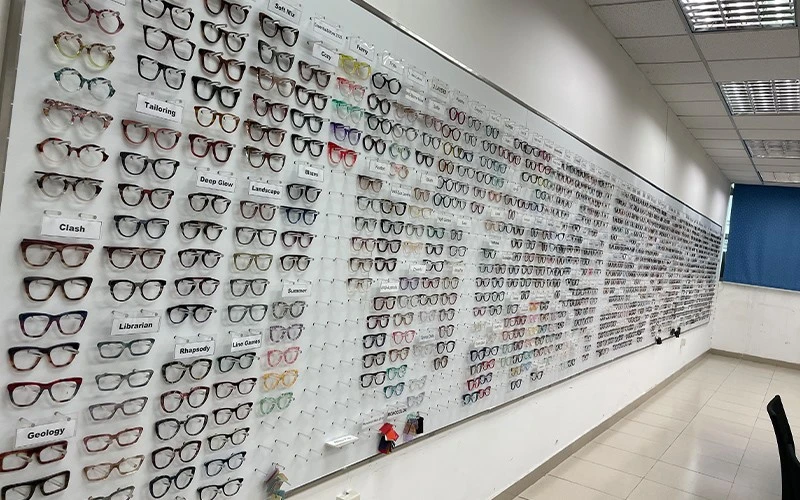
Full disclosure: we are an eyewear company based in Shenzhen, and we hold equity in the partner factories we work with - so we sit on the supplier side of this conversation. That is exactly why we wrote this guide.
Every week we talk to buyers who got burned somewhere else first. The stories repeat themselves: colors that drifted between batches, hinges that worked loose within months, a "factory" that turned out to be two salespeople and a WeChat account. Almost all of these problems were visible early. The buyers simply didn't know which questions would have brought them to the surface.
You don't need to become an eyewear engineer before placing an order. You need to know what to ask, what evidence to request, and which answers are warning signs. If you are evaluating an optical frame supplier in China right now, the checklist below is the one we would use if we were sitting on your side of the table.
1. First, Find Out Who Actually Controls Your Order
Any supplier can send you a quotation within a day. Managing materials, sampling, production, quality, and shipping across six months is a different job entirely.
So before you compare prices, ask one question: who is responsible for each step of my project - and will they put it in writing?
A partner does not need to own every machine. Our own projects run through factories we hold shares in, working alongside long-term specialized partners for acetate, metal and titanium, plating, and packaging. So whether a company calls itself an optical frame manufacturer in China or, like us, coordinates production through factories it has invested in, judge it by the same test: is it transparent about the process, and will it take written responsibility for the result?
Ask for:
- The legal company name that will appear on contracts, invoices, and bank accounts
- The role of every company touching your project
- A live video walkthrough of the office, sample room, QC area, and relevant production sites
- The physical locations where sampling, production, inspection, and packing will happen
- A named contact for engineering, quality, and shipping
- Recent export references or third-party reports, where available
Red flags we take seriously:
- Refusing to arrange a live video review
- Different company names on the quotation, the contract, and the bank account
- No clear answer on who handles development, production, inspection, and shipping
- Complex custom tooling offered at an MOQ that cannot cover the mold cost
- "Premium materials" with no batch information behind them
- No written standard linking the approved sample to bulk production
- No named person when you ask, "Who owns a quality problem if one happens?"
2. What to Ask a China Eyewear Supplier About Capacity, Lead Times, and Engineering
Ask for a monthly capacity figure and you will get one. It will sound impressive, and it will tell you almost nothing about how your order will actually be handled. These questions tell you more:
- How many projects similar to mine are you running right now?
- What capacity can you allocate to acetate, metal, titanium, TR90, or PC frames?
- Which steps do you manage directly, and which go to partner factories?
- Who builds the production schedule - and what happens to it when material arrives late or a process fails inspection?
- What are your normal sampling and bulk lead times? The average, not the best case.
A partner that knows its limits answers these precisely. Treat "everything is possible" and "any delivery date is fine" as answers that should worry you, not reassure you.
Engineering support is where sampling succeeds or fails. Swapping a logo takes basic support. A new temple shape, a special hinge, a mixed-material design, or a custom fit requires a real technical review. Before you commit, find out whether the team can:
- Read 2D drawings, 3D files, or a full tech pack
- Flag structure and tolerance risks before sampling starts
- Recommend materials and processes against your target price
- Coordinate tooling and mold changes
- Keep a controlled record of every approved design version
- Give you a named technical contact for your project
Here is why this matters in practice. Not long ago, a long-term European client sent us renderings for several new styles. Everyone on our team liked them - the designs were fashionable and looked ready to go. But when our engineers started turning the renderings into production drawings, the problems showed up. Some structures that looked great on screen would have caused real trouble in mass production: the joint between the frame front and the temple would have pushed the defect rate up, and the chamfering on the front did not meet production requirements. The designs looked beautiful - they just were not buildable yet. It took several rounds of back-and-forth with the client before the drawings were truly ready, and the styles then went into production smoothly.
3. Materials: Ask an Eyeglass Frame Supplier "How Often," Not Just "Can You"
Almost every eyeglass frame supplier will say yes to acetate, titanium, TR90, or stainless steel. The useful follow-up is: how often do you actually run this material, how do you control it, and what problems do you run into most often?
|
Material |
Buyers Usually Choose It For | Watch Out For | Best For |
|---|---|---|---|
| Acetate | Rich colors, premium feel, adjustable fit | Color variation, polishing quality, batch control | Fashion and mid-to-premium optical frames |
| TR90 | Light weight, flexibility, durability | Less fine adjustment, fewer premium finishes | Sports, kids, and high-volume styles |
| Titanium / Beta Titanium | Light weight, corrosion resistance, premium positioning | Higher cost, welding and finishing difficulty | Premium and minimalist collections |
| Stainless Steel | Strength and balanced cost | Surface and plating quality | Everyday metal optical frames |
| PC | Light weight, impact resistance, lower cost | Limited adjustment, less premium | Limited adjustment, less premium |
| Mixed Materials | Differentiated design | More suppliers and processes to coordinate |
Fashion capsules and special collections |
Two suppliers can both say "acetate" and deliver very different frames. For acetate, ask where the sheets come from, how color variation between batches is checked, and whether batch records are kept. If a premium material brand comes up in the pitch, ask for purchasing or batch evidence - serious suppliers keep it.
For titanium or beta titanium, the questions shift: welding experience, surface treatment, nickel release testing, and whether every metal part on the frame uses the same material grade.


4. Private Label Eyewear, OEM, or ODM: Define the Job Before You Ask for the Price
These three terms get used loosely, and the confusion costs money. Before requesting quotes, describe in plain words what you actually want to change - the label matters less than the scope.
| Model | What You Provide | What the Supplier Provides | Best For |
|---|---|---|---|
| Ready Stock / Private Label | Logo, color choice, packaging requirements | Existing styles and production | Fast testing and lower risk |
| OEM | Your design, drawings, tech pack, target specifications | Technical review, sampling, tooling, and production | Brands developing their own designs |
| ODM | Brand direction, target market, budget, selected changes | Existing or newly developed designs | Faster development without starting from zero |
If none of the labels fits cleanly, skip the terminology. Send your reference styles and explain what you want to customize. Typical items include:
- Logo engraving, printing, metal logos, or temple-tip branding
- Custom colors and color matching
- Matte, glossy, gradient, painted, or electroplated finishes
- Custom packaging, pouches, cleaning cloths, and hang tags
- New temples, hinges, fronts, nose pads, or complete molds
One rule for OEM eyewear projects that involve custom tooling: settle mold ownership in writing before you pay for it. Who pays, who owns it, where it is stored, and whether it can ever run another customer's order.

5. MOQ: What Low MOQ Eyewear Really Costs
MOQ is not a barrier invented to keep small brands out. It comes from real setup work: material preparation, color changes, surface treatment, logo setup, packaging, and production-line changeover time. Use the ranges below as a starting point, then ask each supplier to explain its own MOQ.
| Project Type | Common MOQ Range | Why the MOQ Exists |
|---|---|---|
| In-stock frames with logo only | Around 100 pieces | Logo setup and order handling |
| Existing frame with a new color or finish | Often 300 pieces or more | Material and surface-treatment setup |
| Custom packaging | Depends on package type | Printing and packaging material MOQ |
| New custom mold or tooling | Often 1,000+ pieces per model | Tooling cost and production efficiency |
| Complex titanium or mixed-material design | Usually higher | Specialized processing and yield risk |
Low MOQ eyewear is genuinely possible for in-stock styles with a simple logo change. But for fully custom optical frames - new molds, custom colors, branded packaging - the setup cost does not shrink with the order, so the MOQ rises to cover it. A supplier offering complex custom tooling at 50 pieces is either losing money on purpose or planning to recover it from you later.
And never compare unit prices until you know what each price includes:
- Tooling or mold development
- Samples and sample revisions
- Materials and components
- Surface treatment
- Logo and branding
- Standard or custom packaging
- Inspection
- Export documents
- Domestic transport and international freight
- Duties, taxes, and local delivery, where applicable
For a new brand, starting with private label eyewear or limited customization keeps risk low. Full custom tooling becomes easier to justify once your first collection has real sales data behind it.
6. A Timeline Needs Decision Points, Not Just a Delivery Date
"Sixty days" is not a schedule. Ask for a stage-by-stage plan with approval points that you control:
| Stage | Common Reference Range | What You Should Confirm |
|---|---|---|
| Design review and technical confirmation | 3–10 business days | Drawing version, materials, dimensions, tolerances, and approval owner |
| Prototype or pre-production sample | 15–40 calendar days | Structure, material, finish, and revision rules |
| Sample feedback and adjustment | 1–3 weeks per round | Feedback deadline and revision scope |
| Bulk production | 25–50 calendar days | Approved sample, materials, quantity, and production schedule |
| Final QC and packing | 3–7 calendar days | Inspection standard, packaging, shipping marks, and inspection date |
| Shipping | Varies by method and destination | Incoterms, forwarder, cut-off date, and customs documents |
Why your drawing may come back with questions - more than once. In many custom optical frame projects, the buyer's drawing shows the intended shape and look, but nobody has checked it against production reality yet: hinge installation, polishing allowance, plating thickness, material behavior, tooling access, achievable tolerances. Unless the designer has hands-on production experience, expect several rounds of technical back-and-forth before sampling starts.
That back-and-forth feels slow. It is also the cheapest place in the whole project to fix problems. Ask your supplier to explain every suggested change, and make sure each approved drawing version is recorded.
Before production starts, confirm in writing:
- Approved sample and drawing revision
- Critical dimensions and tolerances
- Material and process limitations
- Color reference and approval method
- Surface finishing standard
- Logo position and artwork version
- Tooling scope
- Packaging specification
- Production and inspection milestones
- Who absorbs delays caused by late feedback or design changes
7. Quality Control You Can Verify, Not Just Believe
"Don't worry, we have strict QC" is marketing. Real quality control answers three questions: what is checked, when it is checked, and what evidence you receive.
| Stage | What Should Be Checked | Evidence to Ask For |
|---|---|---|
| Before production | Materials, hinges, screws, nose pads, colors, and batch records | Material records or incoming inspection report |
| During production | Cutting, polishing, welding, plating, alignment, and logo position | In-process photos or inspection records |
| Before shipment | Dimensions, color consistency, hinges, surface quality, logo, fit, and packaging | Final inspection report, photos, or video |
When a supplier says "AQL 2.5," keep asking. That number alone tells you very little. You still need to know:
- Which sampling standard is used
- Which defects count as critical, major, and minor
- Which AQL level applies to each defect type
- Whether inspection happens before packing or after
For a first order or a large shipment, a third-party inspection is money well spent - but agree on the checklist before production, not after problems appear.


8. Compliance: The Documents Your Market Actually Requires
The common question - "Do you have CE and FDA?" - is too blunt to be useful. The better question is which document applies to your product, your market, and your sales model.
Europe. Depending on the product and sales channel, buyers may need CE-related documents, product test reports, REACH information, nickel release reports, and packaging compliance documents.
United States. Spectacle frames and lenses can fall under FDA-related requirements, and registration, listing, labeling, and testing responsibilities depend on the product and on each party's role. Two points buyers routinely get wrong: "FDA registered" does not mean "FDA approved," and impact-resistance requirements generally concern lenses, not every frame component.
Other requests, depending on your market:
- California Proposition 65 information
- ISO 9001 quality management certification
- Social compliance audits such as BSCI or Sedex
- Sustainability or traceability documents
- Packaging and labeling information
One clarification is worth repeating: ISO 9001 certifies a quality management system. It does not certify that a specific frame model meets a product regulation.
9. Protect Your Design Before You Send the Files
The tooling stage is too late to raise design protection. Before complete drawings or 3D files leave your inbox, confirm:
- Who owns the mold or tooling, and where it will be stored
- Whether your design can be shown or sold to anyone else
- Whether exclusivity applies globally, by region, or by sales channel
- Who approves each drawing revision
- Whether any part of the project is subcontracted
Payment terms. A 30% deposit with the 70% balance before shipment is the common starting point for new projects. Final terms should reflect order size, customization level, order history, and inspection arrangements.
After-sales support. Ask what happens if a defect shows up after delivery. A serious answer covers the claims window, what photos, videos, or samples you need to provide, how the root cause will be investigated, whether repair, replacement, remake, credit, or refund applies, who pays freight in each situation, and how the same issue will be prevented on the next order.
10. Location: One Clue in Choosing an Optical Frame Supplier in China, Not the Verdict
China has several established eyewear clusters, and where a supplier sits affects material access, sampling speed, supplier choice, and coordination cost. But an address in the right city never replaces verification - every cluster has excellent suppliers and mediocre ones.
- Shenzhen / Henggang: export-oriented manufacturing with dense access to acetate sheets, metal parts, electroplating, hinges, and lens partners. Often a good fit for mid-to-premium projects that need tight coordination. We are based here, so we are biased - verify us the same way you would verify anyone else.
- Wenzhou: a broad eyewear manufacturing base covering many product levels and large-volume sourcing.
- Danyang: strongly associated with the optical lens ecosystem and related supply-chain resources.
- Xiamen: an established export industry with strengths in sunglasses, sports eyewear, and injection-molded products.
Match the cluster to your product: Shenzhen for close material and finishing coordination, Xiamen for sunglasses or sports eyewear, Wenzhou for broader sourcing options, Danyang when lens integration matters.
11. Score Every Supplier Before the Deposit, Not After
Once the quotations are in, score the evidence - not the promises. Rate each supplier from 1 to 5 in every area below, multiply by the weight, and compare the totals. A cheap supplier with weak process control routinely ends up costing more after delays, returns, and remakes.
| Evaluation Area | Suggested Weight | What Good Evidence Looks Like |
|---|---|---|
| Process and responsibility control | 25% | Clear roles, live verification, named contacts, written process |
| Product and material experience | 15% | Similar projects, material records, real samples |
| Engineering support | 15% | Drawing review, feasibility feedback, version control |
| Quality and compliance | 20% | QC checklist, inspection records, market documents |
| Cost, MOQ, and lead time | 15% | Clear quotation, realistic schedule, written assumptions |
| Communication and after-sales | 10% | Direct answers, claims process, corrective action plan |
Conclusion
Choosing an optical frame supplier in China was never about finding the lowest quotation. It comes down to finding a partner who explains the process, shows evidence, manages the details, and answers the phone when something goes wrong.
Before any deposit leaves your account, you should know who controls your project, which materials and processes will be used, what the MOQ really covers, when each approval milestone lands, how quality gets checked, which documents your market requires, who owns the tooling, and who takes responsibility after delivery.
A supplier that answers those points clearly has already removed most of your sourcing risk.
Working on a new collection? Send us your reference styles, target quantity, materials, and destination market. We will run a short technical review before sampling - the same kind of review described in this guide - and flag the cost, tooling, and lead-time risks early.
FAQ
Is it safe to source optical frames from China? Yes - as long as you verify who controls production, agree on quality standards, and confirm responsibility before paying a deposit. An optical frame supplier in China that answers these questions openly is a very different risk from one that relies on low prices, catalog photos, and certificates alone.
Should I choose a factory or a supply-chain partner? A factory suits a product built on one stable process. A supply-chain partner makes more sense when you need several materials, finishes, or specialized production resources. Either way, ask who controls each step and who owns quality.
What is the difference between private label, OEM, and ODM? Private label eyewear starts from an existing style and adds your branding. OEM eyewear means you provide the design and specifications. ODM starts from a supplier-developed design that you adapt for your brand.
What is a normal MOQ for custom optical frames? Simple logo customization can start around 100–300 pieces; new colors, packaging, and custom molds require more. Always confirm whether the MOQ counts per style, per color, per size, or per order.
How long do sampling and production take? Sampling commonly runs 15–40 calendar days, with bulk production at 25–50 calendar days after approval. Technical revisions, material availability, and packaging confirmation all move the schedule.
Why does my design need changes before sampling? A drawing can look perfect and still need adjustment for hinge installation, polishing allowance, plating thickness, material behavior, tooling access, or realistic tolerances. Those changes are how a design becomes ready for production.
What quality checks should happen before shipment? Dimensions, color consistency, surface quality, hinges, alignment, logo, fit, packaging, and shipping marks. For larger orders, define the sampling plan and defect levels in writing.
Is AQL 2.5 enough? Not by itself. You also need the sampling standard, the inspection level, and clear definitions of critical, major, and minor defects.
What documents should I request for Europe or the United States? For Europe, ask about CE-related documents, product testing, REACH, and nickel release where relevant. For the United States, confirm FDA-related responsibilities based on your product and your role. Registration, certification, and approval are three different things.
Can a startup order a low MOQ? Some suppliers support lower quantities for in-stock styles, simple logo changes, or trial orders. Custom molds, complex finishes, and custom packaging push quantities up.
How can I protect my custom design? Sign a suitable NNN agreement, define mold ownership, restrict unauthorized use, control drawing versions, and set exclusivity by market or channel.
What payment terms are common? A 30% deposit with the 70% balance before shipment is the usual starting point. Better terms typically follow once a stable order history exists.